
33.Montagu Short Stories 3

Updated: 12/06/2025
Story 1: Montagu Museum vier sy 30ste verjaarsdag/ A tribute to Heinie Heydenrych
Story 2: Annie Kriel, Montagu se Hoedmaker
Story 3: François Krige
A tribute to Heinie Heydenrych
A former resident and champion of Montagu’s History passed recently. Montagu Stories recognizes the tremendous contribution made by Heinie Heydenrych in researching and capturing the history of Montagu. He wrote regular interesting articles on the history of Montagu for the Montagu Mail under his brand name Stories of old Montagu and was commissioned to compile a commemorative brochure for the museum’s 30th birthday.Three of his stories published in the Montagu Mail follow.

Heinie Heydenrych


Stories of old Montagu
Montagu Mail December 2005
Montagu Museum vier sy 30ste verjaarsdag
Op Saterdag 12 November 2005 het die Montagu Museum op ʼn luisterryke wyse sy 30ste bestaansjaar gevier. Die funksie het in die Museumgebou plaasgevind en het uit drie dele bestaan.
‘n Boek met stories oor Montagu deur hierdie skrywer is amptelik oorhandig, daarna was daar ‘n deftige oggendtee, terwyl 30 trourokke deur pragtige meisies van Montagu Hoërskool gemodelleer is.
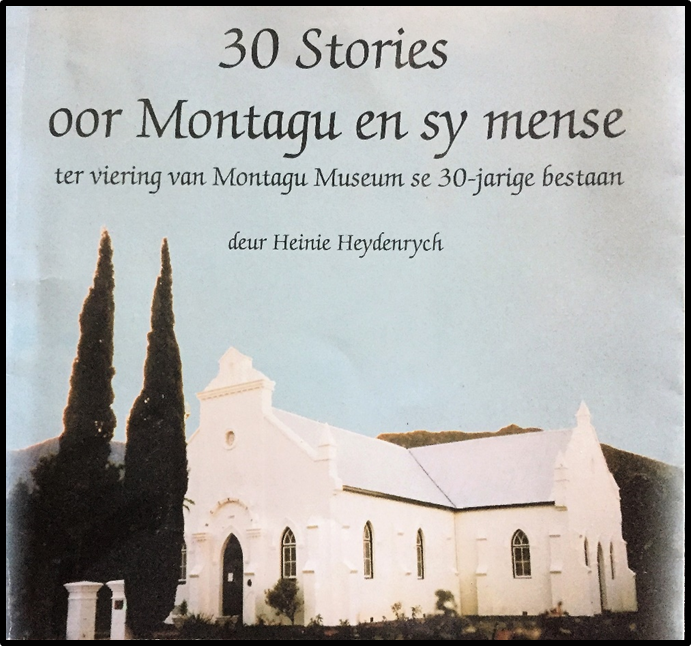
Die vieringe het rondom die tema 30 gesentreer. Nie net is die 30ste verjaardag gevier nie, maar die titel van die boek is 30 Stories oor Montagu en sy mense, en daarby is 30 trourokke vertoon. Die boek is gelyktydig in Engels uitgegee onder die titel Montagu and its people: 30 stories.
Nadat die eerste kopie van die boek aan mev. Jeanne Biesenbach, voorsitter van die Museum se Trusteeraad, oorhandig is, het mev. Esther Hofmeyr, die stigter van die museum en eerste voorsitter – aan wie dit opgedra is – ook ‘n eksemplaar ontvang.
Die boek is ‘n bundel stories oor Montagu se geskiedenis waarvan die meeste die afgelope vier en ‘n half jaar in die Montagu Mail in die rubriek Stories of Old Montagu verskyn het. Sommige stories is egter hersien en bygewerk en daar is ook ‘n paar stories daarin opgeneem wat nog nie voorheen gepubliseer is nie.
Die boek is keurig versorg met ‘n pragtige kleurfoto van die museumgebou op die omslag, en elke storie is met foto’s toegelig. Dit is by die Museum en Jouberthuis te koop. ‘n Veertigtal borge uit die geledere van die Vriende van die Montagu Museum het ook elk ‘n eksemplaar van die boek ontvang. Hulle donasies dek die drukkoste.
Die sowat 80 gaste wat aan die keurig gedekte tafels aangesit het, het daarna aan die heerlike eetgoed weggelê. Tussendeur is hulle getrakteer op ‘n vertoning van trourokke soos nog nie tevore in Montagu gesien is nie. Verreweg die meeste rokke wat vertoon is, was die handewerk van mev. Angelique Albertyn, die kranige rokmaker van Brink Broers van 1920, tot 1952.
Die skool dogters is deur mev. Elmarie Rossouw afgerig en die meisies en hulle uitrustings het telkens groot applous uitgelok.
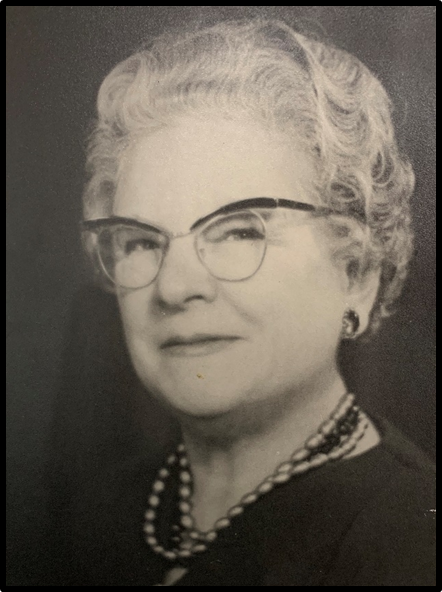

Montagu High school pupils modelled the wedding dresses some of which were made by Mrs Albertyn (above left).
Picture above right:
From left (back): Elmarie Rossouw, Chanelle Stander, Juané Brits, Amelia Malan, Liana Roux, Audrey Fourie, Laura Wigmore, Elise Burger,Phoebe Metcalfe. Front: Francelle Joubert, Sonja Nel & Leandé Kleinhans.
Pictures: Montagu Mail/Montagu Museum
Twee persone oor wie stories in die boek handel, was teenwoordig. Hulle was mev. Esther Hofmeyr en mnr. Frank Swart van Montagu, een van Montagu se laaste skoenmakers. ‘n Oudburgemeester, mnr. Manie Wahl, was ook onder die gaste.
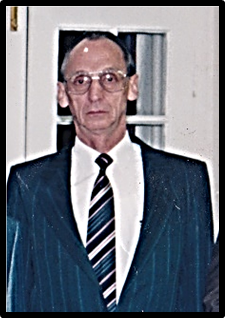
Manie Wahl
Picture: Blackie Badenhorst
Die uitnodigings- kaartjie het “feestelike” kleredrag vermeld en heelwat van die dames het meegedoen. Twee van die senior dames wat met hulle stylvolle hoedjies uit die oude doos die oog gevang het was mev. Yvonne Bussell en Martha Augustyn.
Die funksie is deur een en almal terdeë geniet en die museumpersoneel verdien ‘n klop op die skouer vir ‘n uiters suksesvoile aanbieding.
Stories of old Montagu
Montagu Mail August 2003
ANNIE KRIEL, MONTAGU SE HOEDEMAKER
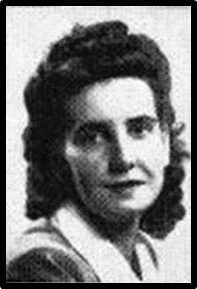
Annie Kriel (geb Nel) op 26-Jarige ouderdom
Tant Annie Kriel van Huis Uitvlucht was in haar jongdae ‘n hoedemaker, ‘n ambag wat al feitlik uitgesterf het. Sy is in 1919 as Annie Nel op Montagu gebore terwyl haar ouers in die Keisie gewoon het.
Toe sy 11 jaar oud was het haar ouers na Humansdorp verhuis. Daar het haar ma haar winkel toe geneem om ‘n hoed vir die Sondagskool te koop en het Annie vir haar gesê sy wil blommetjies om die kant laat aansit. Net daar het sy besluit sy sou graag eendag ‘n hoedemaakster wou word.
As jong meisie het sy en haar suster in Port Elizabeth geloseer en by ‘n winkel genaamd Colnick Bros, gewerk. Dit is hier dat ‘n Irakse of Iranse vrou haar die kuns van hoedemaak geleer het. Sy vertel dat die vrou maar bitter min Engels magtig was en dat sy, elke keer wanneer Annie iets verkeerds gedoen het, vir haar gesê het: “You baboon!”.
Na vyf jaar is Annie terug na haar ouers in Humansdorp omdat laasgenoemde te veel verlang het. Sy verneem toe van ‘n werkgeleentheid by ‘n winkel in Oos-Londen en besluit om daar te gaan werk terwyl sy by die YMCA loseer. Daar het Annie as hoedemaker gewerk totdat haar ouers besluit het om terug Montagu toe te trek. Hier aangekom het Brink Broers van haar talent te hore gekom en haar in diens geneem. Na ‘n paar jaar is sy op 29-jarige ouderdom getroud en het Worcester toe verhuis, waar sy ‘n kwartaal lank by ‘n skool klasgegee het. Daarna het sy jare lank haar ambag bedryf met ‘n bruinvrou as hulp.
Nadat sy drie kinders gehad en haar vierde verwag het, het mnr. George Brink haar versoek om weer vir Brink Broers te kom werk. Sonder ‘n man moes sy toe die mas opkom, met ‘n bruinvrou wat bedags haar kinders opgepas het. Hier het sy toe wyd bekendheid verwerf met haar hoedemakery.
Beter finansiële vooruitsigte het haar genoop om na ‘n paar jaar weer Worcester toe te verhuis. Sy het weer haar eie winkel daar bedryf, maar al hoe meer kompetisie ondervind van winkelgroepe soos OK en Greatermans wat klaargemaakte hoede teen laer pryse verkoop het. Intussen het Aero Ko-operasie ‘n winkel op Ashton oop- gemaak en is sy ‘n pos as hoofdame in die damesafdeling aangebied.
Op 48-jarige ouderdom is sy die tweede keer getroud met mnr Dolf Kriel wat saam met sy broer ‘n slaghuis op Montagu besit het. Hier het sy agt jaar lank ‘n hoedemakery-winkel naby die destydse Avalon Hotel gehad. Sy het ook materiaal, gare, kramery (haberdashery), hoede en juweliers-ware verkoop en goed gevaar. Die winkel was egter op haar man se naam en hy het uiteindelik besluit om dit te verkoop. Daarna het sy by die huis verder gewerk. Sy was onder andere een van die eerste persone wat gaatjies in vroue se ore gemaak het vir die dra van oorkrabbetjies.
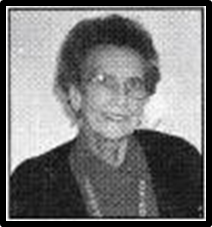
Op 72-jarige ouderdom is Dolf Kriel oorlede. Sy het toe in ‘n huis in Badstraat gewoon waarna sy na ‘n woonstel in Piet Retiefstraat verhuis het. In Julie 2002 het sy na Huis Uitvlucht.
Stories of old Montagu
Montagu Mail September 2005
FRANÇOIS KRIGE EN MONTAGU
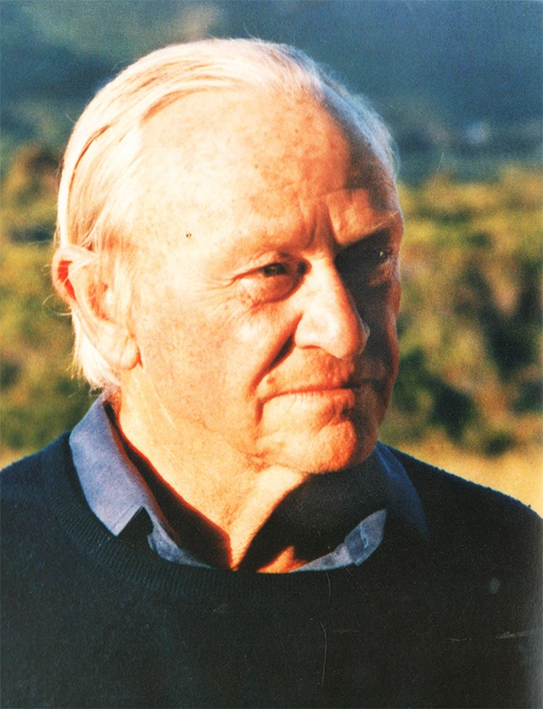
The late artist François Krige
Picture: antiquarianauctions.com
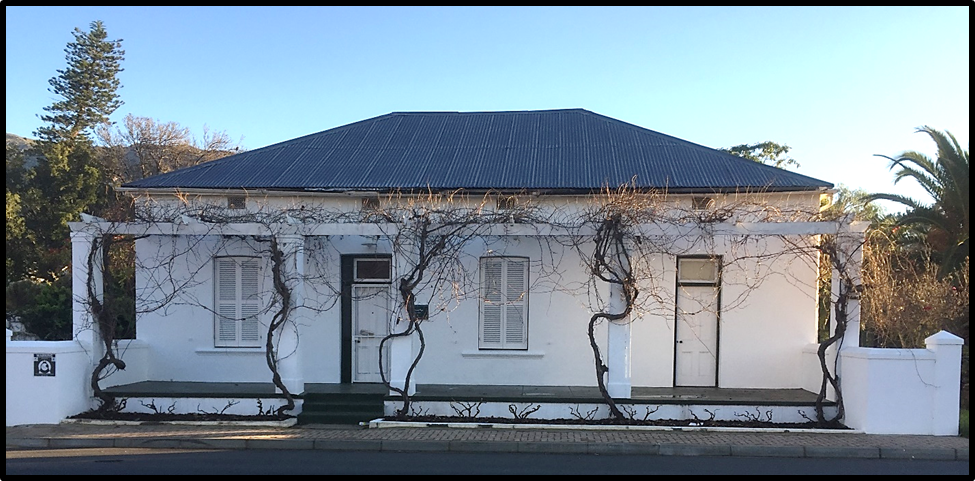
DieKaaps-Hollandse huis by Langstraat 35, op die hoek van Lang en Kerkstraat, was vir 28 jaar lank die tuiste van François Krige. Krige was ’n post-impressionistiese skilder van wie sy susterskind, Justin Fox, in sy boek The life and art of François Krige (Kaapstad, 2000), sê, “Krige painted this country in a manner informed by European traditions, but his eye was that of an African and the feeling and emotion he invokes are indigenous”.

35 Long Street

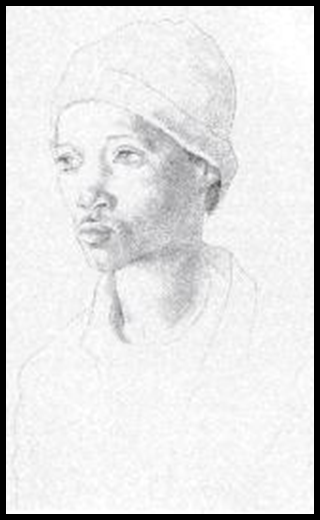
Young girl with cap – Pencil – 1976
Dit is ’n goeie opsomming van die skilder se benadering tot sy werk. Hy is naamlik beïnvloed deur die Europese tradisie, maar hy is deur die landskap en mense van Suid-Afrika geroer. Dit is hoekom die onderwerpe van sy werke dikwels doodgewone dorpsmense en dorpstonele is, asook die berge en ander karaktereienskappe van die landskap wat hom geinspieer het.
François Krige is in 1913 in Uniondale gebore en het op Stellenbosch skool gegaan. Een van sy drie broers was die bekende skrywer en digter Uys Krige en sy pa was die legendariese Springbok-rugbyspeler Japie Krige. Na ’n kursus aan die Michaelis-kunsskool in Kaapstad het François sowat drie jaar in Johannesburg gewoon. ’n Geldprys wat hy in ’n skilderkompetisie gewen het het hom in staat gestel om in 1934 Europa toe te gaan waar hy aan ‘n kunsinstituut in België studeer het. Hy het ook drie jaar saam met sy broer Uys in Spanje deurgebring en heelwat ander lande besoek. Hy het ’n groot bewondering vir Van Gogh en Rembrandt gehad.
Van 1941 af was François meer as drie jaar lank ’n oorlogkunstenaar wat tonele aan die front in Noord-Afrika en Italie geskets en geskilder het.

François Krige
Picture: Eliot Elisofon Photographic Archives, National Museum of African Art
In 1946 het hy sy eerste uitstalling van na-oorlogse skilderye in Kaapstad gehou. Nadat hy in Dorpstraat in Kaapstad ’n ateljee betrek het, het hy in 1960 vir Sylvia Shear ontmoet wat sedert die vroeë sestigerjare ’n kunsgalery in die stad besit het. Sylvia was grootliks verantwoordelik daarvoor dat hy bekendheid as kunstenaar verwerf het deurdat sy sy werke bemark het. Ses jaar later, in 1966, is hulle getroud.
Spoedig na die troue het die paartjie die huis in Langstraat in Montagu gekoop en daar sou François voortaan sy werk voortsit. Hy was baie gelukkig in Montagu. Hy het van die rustigheid van die dorp gehou en hier het hy die privaatheid gehad wat vir hom so beiangrik was. Na ’n paar jaar het hulle die huisie langsaan gekoop en dit in sy ateljee omskep. Vandag staan die ateljee toe, maar dit kan op versoek opgesluit word vir ’n begeleide toer van die skilderye wat nog daar gehou word.
Hoewel uiters beskeie en privaat, was François ’n baie bekende karakter in die dorp. Hy was atleties en ’n goeie tennisspeler wat gereeld op die bane agter hulle huis gespeel het. Hy kon dikwels in sy kombi gesien word waar hy in die dorp en daarbuite rondgery het. Hy het baie tyd in die natuur deurgebring en veral dikwels in die berge gaan stap, selfs tot kort voor sy dood.
Hoewel Krige in 1949 deur die Suid-Afrikaanse Akademie vir Wetenskap en Kuns met ’n erepenning vir sy skilder en grafiese kuns vereer is, het hy nooit regtig die erkenning ontvang dat hy verdien het nie. In Montagu het hy egter in 1993 die ereburgerskap van die dorp ontvang, as waardering en erkenning vir die bekendheid wat hy aan Montagu verleen het en as blyk van die hoë agting wat daar in die gemeenskap vir hom bestaan het. Sover bekend is hy die enigste persoon wat nog hierdie eer te beurt geval het.
Nadat hy ernstig siek geword het is François met groot geduld en liefde deur Sylvia versorg. Hy is in Februarie 1994 oorlede.
Sylvia Krige is in Januarie 2001, oorlede maar gelukkig is die ateljee nog in familie besit en deel van Montagu se kultuurerfenis.

A little more on Françios Krige during the war
SIDI REZEGH: IMAGES OF DEATH AND HORROR
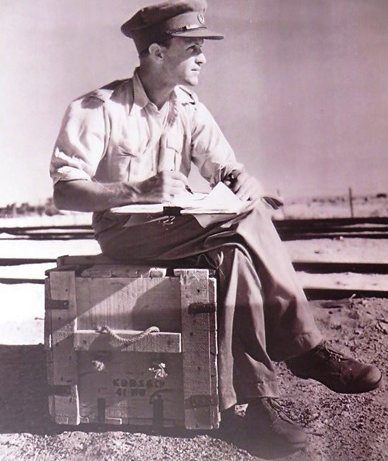
Extract from article by
Allan Sinclair
Ditsong National Museum of Military History
30 April 2020
During the First World War (1914 – 1918) most nations that participated went to great lengths to record the activities of their soldiers in sketches, watercolours and oil paintings. South Africa was one of the exceptions and, as a result, no official First World War art collection of South Africa’s role exists.
This mistake was not repeated and soon after South Africa’s entry into the Second World War (1939 – 1945), artists were appointed to travel to the battlefronts where the Union Defence Forces fought. The resulting official collection of 925 works of art is housed at the Ditsong National Museum of Military History.
François Krige was amongst the first artists to be selected for this task in 1940 and this article looks at four works produced by him after the Battle of Sidi Rezegh (23 November 1941).
At the outbreak of the war in 1939 François and his four brothers signed up. François was appointed as a war artist while Uys became a war correspondent. The position that they took as Afrikaans speaking South Africans positioned against Nazi Germany drew strong criticism from National Party supporters in South Africa and right-wing newspapers wrote abusive articles about the brothers.
Justin Fox, a great nephew of François who published a book The Life and Works of François Krige in 2000, wrote that many of his images produced in the desert of North Africa are overworked and the use of oil colour is often unsure, probably due to the fact that he was supposed to be a quasi-journalist recording facts and was not at all enthusiastic about the kind of images of destruction he was compelled to record.[1]
Sidi Rezegh
Towards the end of 1941 Krige travelled across the desert from Cairo to Sidi Rezegh on the outskirts of Tobruk. It was there that on 23 November 1941 the 5th South African Brigade had been completely overrun by the German XV and XXI Panzer Divisions. At the end of that fateful day the Brigade had ceased to exist as a fighting force and, out of an initial strength of 5 700 men, only 2 300 escaped to safety.
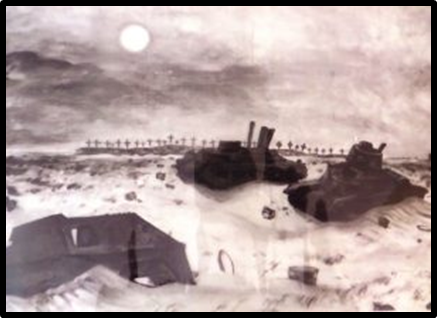
Drift Sands top of Halfaya Pass (Cat No 1636)
Of the 3 394 South African casualties, 224 soldiers had been killed and 379 wounded.
The remainder, including Uys Krige who had been attached to the Brigade as a correspondent, were taken into captivity.
At Halfaya Pass on route to Sidi Rezegh, Krige sketched a sea of graves and wrecked tanks beside the road. It was a scene of total destruction with barely any buildings or vehicles left intact.

Death comes in the afternoon (Cat No 1619)
As Krige neared the battle scene, it became apparent that the horizon was littered with burned out vehicles and dead bodies. Krige stopped beside a German staff car that had suffered an attack by Allied aircraft. The two occupants of the car were slumped dead beside the vehicle. The stench of rotting flesh and hosts of flies provoked such a response in him that his sketchbook provided the only answer.
The vehicle in the painting is a German Lechter Messtruppkraftwagen (Sfz 3).
Interior of a knocked-out British tank, Sidi Rezegh (Cat No 1726)
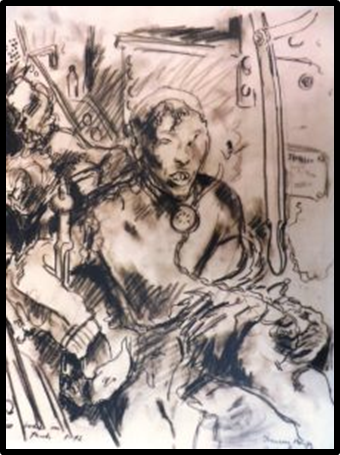
At Sidi Rezegh Krige was confronted by the sight of a destroyed British tank that still had a dead body inside. Krige describes the scene as such:
“A shell had taken off the turret as neatly as with a knife; and we had a detailed view of the tank’s interior. With his hands firmly grasping the steering wheel, the driver sat erect in his seat, straining backwards as if, in the final moment, he had wanted to jerk his stationary tank into sudden action. A taut figure sat there, pitch-black since it had been completely carbonised, but perfectly preserved except that it had contracted to about two-thirds of an ordinary man’s size.” [2]
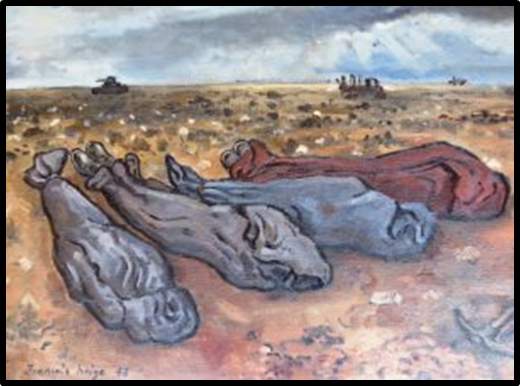
“Nature Morte” (Cat no 1817)
Krige then arrived at the burial grounds for the Sidi Rezegh fatalities. The graves were being laid out near the tomb of the Arab Sheik after whom the area is named. One scene depicts a group of four body bags which were rendered as though they were butterfly cocoons. A full moon rises over a plain where the grave diggers work hard to bury the bodies. Each bag is a subtly different combination of greys, blues and mauves with pairs of boots protruding, from two of them. It suggests the unique character of each of its inhabitants.
Conclusion
François Krige was moved by his experiences during this visit and the scenes of the battlefield at Sidi Rezegh left a lasting impression on him. He spent quite some time recording the horrors he had seen. Krige clearly tried to capture the alienation of battle and was uninterested in attempting to portray or celebrate the glory of war. His fellow war artists and correspondents often stated that he was a recluse who kept himself apart from the others, rather turning in on himself to deal with the traumatic life that he had become involved in.
[1] J.Fox, 2000
[2] J.Fox, 2000
References
Fox, J The Life and Works of François Krige (Cape Town, Fernwood Press, 2000).
Huntingford, N The Official World War II works of François Krige (Johannesburg, DNMMH, 1980).
Library File 920, “Krige François” (Archives of the DNMMH).
Article Verified by
S R Mackenzie
Director

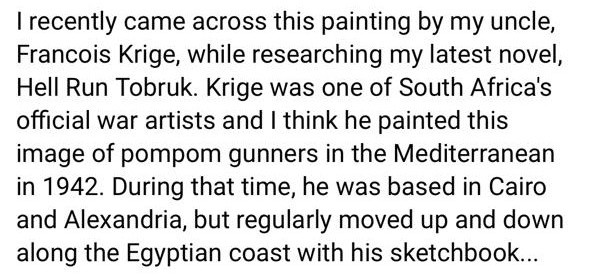
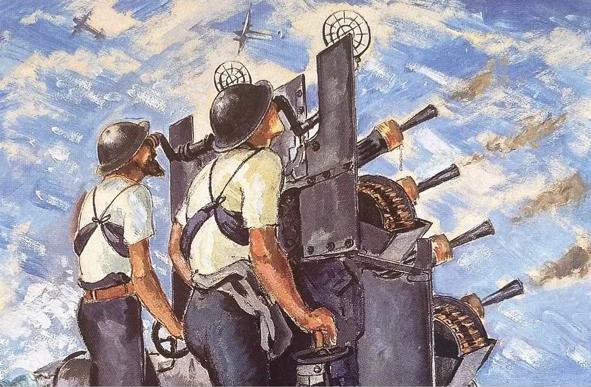
And something about his wife
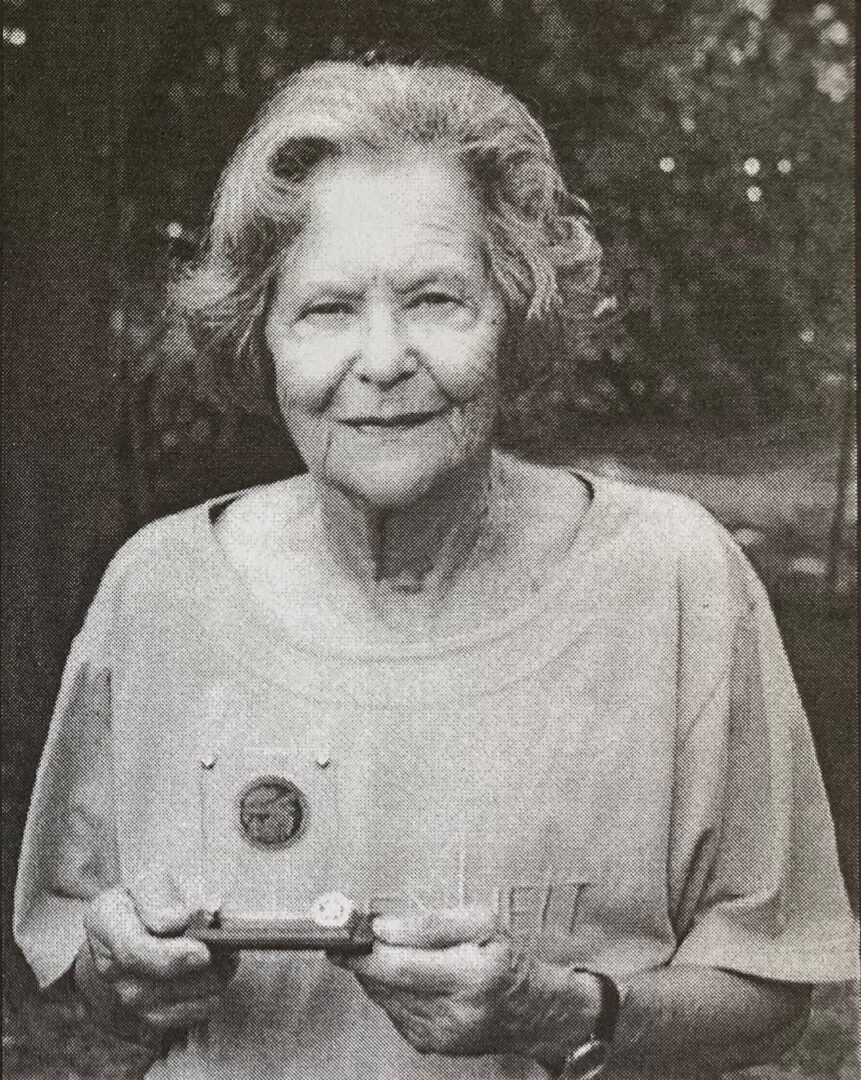
Mrs Sylvia Krige with the medallion she received honouring her for her work during the Israeli War of Independence.
Sylvia Krige honoured by Israel
Everyone who knows Mrs Sylvia Krige as the unassuming lady who lives in Long Street and runs the François Krige Art Studio, was astounded to hear that she has been given a medallion of honour by the people of Israel for her contribution to the war effort in 1948!
The award was made late last year during the 50th anniversary celebrations of the War of Independence. At a moving occasion in Cape Town, Sylvia, along with the widow of the famous plastic surgeon Jack Penn, David Susman, head of Woolworths and several other South Africans were similarly honoured.
In 1948 Sylvia was working in Johannesburg as a nurse when the news came that medical staff and supplies were needed for a mercy flight to Israel, which was then starting the War of Independence.
Passing through Cairo, where their plane was confiscated, Sylvia and another nurse, Mere Gillis, eventually reached Beersheba, parachuting in at night!
“To our horror we were confronted by this enormous Israeli with a bayonet! We couldn’t speak a word of Hebrew, and kept on making cross signs – meaning Red Cross! He must
have thought we were mad,” says Sylvia.
Although Sylvia speaks quite lightly of her duties as a nurse during the war, it must have been a horrific time. Conditions were extremely primitive, with hospitals set up in tents in the desert and bulldozers pushing sand aside to make an operating theatre.
“At one stage we were doing direct blood transfusions, as there was no serum. At night we had to wash sheets because there wasn’t enough bedding to go round.
“We had no anaesthetic. A soldier came in with a bullet wound in his leg and we used whisky to anaesthetise him and disinfect the wound. When the, doctor arrived, all he said was ‘slivovitz!’ and that’s how we found out he was Czechoslovakian,” she says.
The award presented to Sylvia, a small gold circle encased in perspex, reads: Medallion of honour for saving Jewish lives.
