
137.Thelma Gutsche lived in Montagu


07/01/1915 – 05/11/1984
By
Michelle Christian
If ever there was someone who could be described as an enigma then Thelma Gutsche must certainly fit the description, for she seems to be a largely unexplored treasure of South African history. Her seminal work on South African cinema, The History and Social Significance of Motion Pictures in South Africa 1895 – 1940, as well as her many other major biographical works , essays and contributions to encyclopedias, newspapers and magazines, attest to the prodigious output of this South African historian, author and social commentator. Apart from the thorough and lengthy academic paper on Thelma Gutsche prepared by Ntongela Masilela “Thelma Gutsche: A Great South African Film Scholar”, there is very little other information published about the academic who was such an important social and historical commentator of South African life of the late 19 th and early 20 th century.
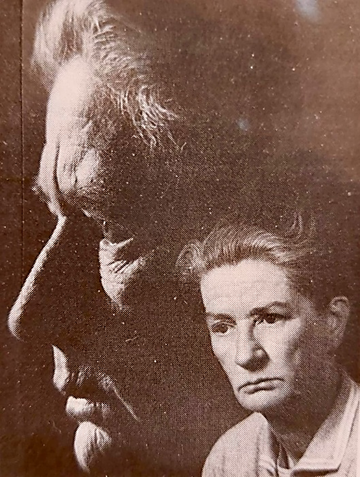
Thelma Gutsche is acknowledged as a South African film scholar, which might at first create confusion, given that her major work on the social and historical significance of film in South Africa is based on European and American film and not South African made film. Her work should rather be understood as an analysis of the social and cultural effects that European and American film had on South African audiences. Given an understanding of how Thelma Gutsche fits the description of a South African film scholar, one is bound to ask why she is included in a collection of work dedicated to the New African Movement.
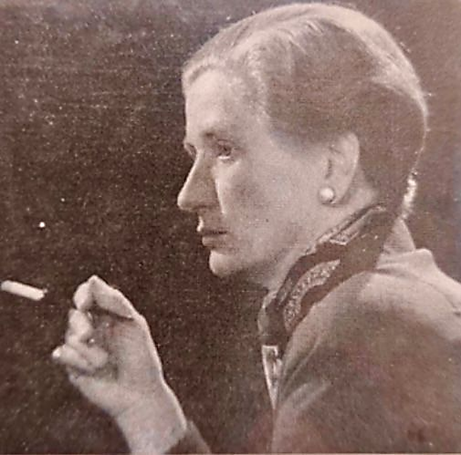
Pictures: from books written by Thelma Gutsche
As a white South African writing about European and American film in a South African context, one might not immediately make the connection between Thelma Gutsche and her inclusion in a body of work on the New African Movement. This intellectual movement was primarily concerned with the introduction of the concepts of modernity into South Africa and their propagation through the literature and politics of mainly Black South Africans, a New African modernity as opposed to a South African modernity. However, Thelma Gutsche is recognized as having made a contribution to South African modernity in that the content of both her major work on South African film and her biographical works deal with concepts such as “the importance of cities as cultural and social spaces for the realization of certain happenings of modernity” (Masilela 4), “delineating sports as the necessity of modernity” (Masilela 4), and how “the mining revolution unleashed modernity” (Masilela 5).
Examining the life of Thelma Gutsche, it becomes apparent that her sensibilities and manners were patently of a European and British nature, which undoubtedly accounted for her bias toward European film as opposed to the sensationalism of American film. Given that the concept of modernity in South Africa was ultimately based on the precepts of the European Renaissance, a period of revival throughout Europe marking the transition into modern times, one is tempted to draw connections between Thelma Gutsche’s penchant for European film and the fact that the concept of modernity was ushered into the world via Europe . Ntongela Masilela has already dealt with the academic examination of Thelma Gutsche’s work in ”Thelma Gutsche: A Great South African Film Scholar”. Of interest here, in order to gather a more comprehensive picture of this larger than life individual who had such a great part to play on the examination of the social and historical relevance of early South African cinema, is to investigate beyond the persona of the academic and to read into the ‘text’ of Thelma Gutsche’s personal life.
Thelma Gutsche was born in Somerset West in the Cape Province, in the then ‘Union of South Africa’ in 1915, the younger daughter of Dr and Mrs J Gutsche (Becker 2). She never attended a school but was privately tutored at home, the individual attention and her intellect no doubting contributing to the fact that she matriculated at the tender age of 14. Two years later, she entered the University of Cape Town, aged 16, to begin her B.A. studies in Ethics, Logic, Philosophy and Psychology (Viljoen 2). She went on to complete her M.A. in Ethics, Logic and Metaphysics. After graduating, she moved to Johannesburg to take up a position with the weekly newspaper “The Forum”, writing reviews for films from 1938 until 1939. Thelma Gutsche apparently loved the “south of Africa” with “an abiding passion (…) especially the Cape Province, but did not like Johannesburg, although she knew it well, (Becker 43) and would go on to publish books on the city.
Gutsche went on to write a series of articles on the South African film industry for the Cape Times between 1937 and1950. During World War II, she became a film adviser to the South African government as well as writing scripts for documentaries and directing films. Following the war she went on to make a number of educational films (Viljoen 2).
Thelma Gutsche was undoubtedly a young woman of privilege, her father being the former Manager of De Beers Dynamite Factory and later the director of the South African Paper and Pulp Industries, Ltd. Johannesburg (Untitled). Thelma Gutsche mixed with extremely well connected and influential individuals, becoming very close to the likes of Parliamentarian Barn Friedman and his wife Lulu, with whom she had lifelong friendships (Becker 35–50). Gutsche went into the publishing business with Lulu Friedman and two other male acquaintances, but ‘Silver Leaf Books’, their publishing venture, proved to be unsuccessful, publishing only two titles: Zulu Paradox , by Hugh Tracey, and Face to Face , the first published book of Nadine Gordimer (Becker 40). Thelma Gutsche was also befriended by Princess Alice, Countess of Athlone, when the Earl was Governor-General of South Africa (Becker 43). Years later (circa 1979/1980), on the occasion of the Princess’s 95 th birthday, Dr Gutsche sent the Princess a copy of her book There was a Man – The Life and Times of Sir Arnold Theiler, via her friend Barn Friedmann, the Princess having expressed great interest in Dr Gutsche’s long and intense research into the life of Theiler (Goosen 8).
In 1946, eleven years after leaving the Cape, Thelma Gutsche was awarded her Doctorate in Social History from the University of Cape Town under the guidance of Prof. F C L Bosman. Her thesis topic was: The History and Social Significance of Motion Pictures in South Africa 1895 – 1940. This would only come to be published in book form by the Human Sciences Research Council in South Africa, more than thirty years later, due to scholarly demand from students (The Argus 4). During this time, Gutsche was working for African Consolidated Theatres, as head of their Documentary Film section, (Becker 40) a period which no doubt had some measure of influence on chapter X (‘Kinemas break the “monopoly” and introduce “talkies” – formation of African Consolidated Theatres and Films Ltd 1927 – 1931′) of the published book version of her thesis.
In a speech to the Council for Women (Gutsche 1-7) Thelma Gutsche’s words displayed her fiercely independent streak and favoring of women’s rights, stating that “[w]hile [she was] in full sympathy with the aim of the new ‘Women for Peace’ (to which [she did] not belong), [she] would give [her] full support to ‘Women for Strife’ – strife against discrimination in all its forms: sex, color, race, culture, education, religion – all the causes of war” (Gutsche 2-3). She talked about it being a time for forceful attack on the evils of our society. “From the dawn of time, women have always been regarded as the custodians of decency and refinement, even in the most repressive communities”.
It appears as if Thelma Gutsche was a bit of a paradox; she was a most independent woman, ahead of her times, but could also be severely conservative in her outlook: cosmopolitan but neurotic; tweeds versus her signature cigarette-holders. She was a woman who drove her open sports car with the hood down but was also conservative and upright. She was practical, industrious, a workaholic and staunchly loyal (Becker 37). She was a woman who displayed a wide variety of interests and possessed an investigative spirit. Even in her late 60s, when she was retired in Montagu, her industriousness caused her to continue to work late into the night on her research.
She is described by a friend as “generous-hearted, (…) never willingly wound[ing] (…) anybody’s amour propre ” (Becker 37). She was a loyal friend who, at the age of 67, in December 1982, already rather frail, drove the long road to Johannesburg all alone in her old car to see her ailing, long-time friend, Barn Friedman.
Thelma had elaborate manners and was very fastidious, an eccentric, elegant, and dramatic woman (Becker 36) with a “small, high-pitched voice” and “ a slight lisp” (Becker 35). “[S]he was tall, thin, very elegant. In dress, gesture, manner, atmosphere, she was like nobody else” and “[s]tyle was of great importance to Thelma” (Becker 35).
Although she is reported to have enjoyed the company of men “[a]ll Thelma’s closest and most intimate relationships were with women” (Becker 37). For all her busy life though, she expressed a horror of aloneness when one had longed for and stood supported by a companionship suddenly withdrawn” on the demise of her friendship with Lulu Friedman (Becker 42). She was said to be a cantankerous and truculent woman in the latter part of her life, ill-tempered, quarrelsome, and fierce (Becker 47). She developed emphysema as a result of her lifelong habit of smoking but stubbornly refused to give it up.
Dr Gutsche was always involved in the community around her, giving of her time and expertise, and was responsible for either founding or becoming deeply involved in many worthy causes: she was a member of the Africana Museum Advisory Committee from March, 1956; she served as a Founding member and Trustee of the Association of Friends of the Johannesburg Art Gallery, and eventually became their Honorary Life President; she served on the Consultative Committee of the Bensusan Museum of Photography from 1968, until August 1981, when she resigned because of her retirement to Montagu (Africana Notes and News 186); and was a founding member of the Simon van der Stel Foundation, a non-profit, private organization that conserves and restores buildings of historical and architectural importance, reflecting her belief in the importance of historical detail. She was also an active member of the National Council of Women in South Africa, becoming President of the Council at one stage, and traveled to Athens to address the International Council of Women (Becker 41). Thelma Gutsche continued to support and work for the causes she believed in after her retirement.
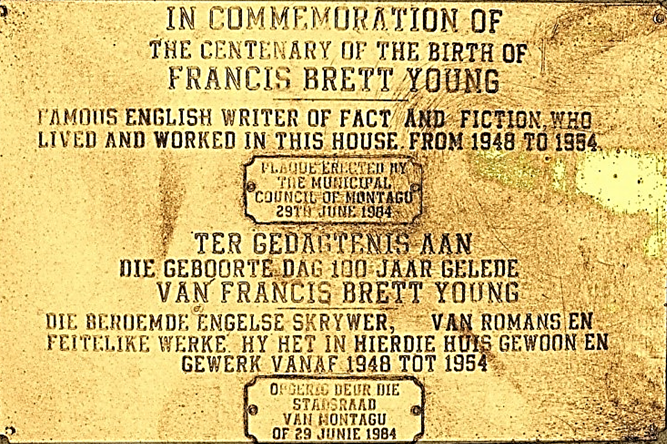

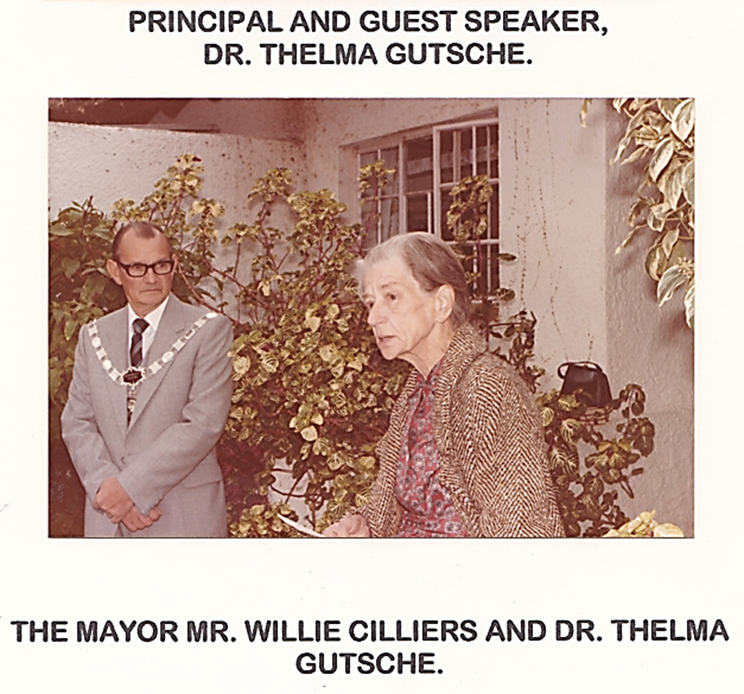
Thelma officiated at the unveiling of a plaque to commemorate Francois Brett Young at the house in De Kock Street where he lived while in Montagu.
Pictures: Montagu Museum
Thelma Gutsche was an “indefatigable researcher and author of works of biographical and social interest” (Becker 35). She criss-crossed the Karoo on her own in her search for places, relics and reminiscences of her biographies (Becker 48). Thelma Gutsche was renowned for being painstakingly meticulous in her work. She approached her research on Arnold Theiler, the book of which took ten years to write, with a scientific thoroughness, interviewing Theiler’s family, friends and work colleagues, even traveling to Switzerland to track down relatives and papers connected to Theiler. In her work there was an emphasis on facts, and she exhibited a balanced, sober judgment, shying away from any emotional involvement. The nature of her research methods were arguably allied with the rationalism of the European Enlightenment, scientific and factual (Suid-Afrikaanse Oorsig).
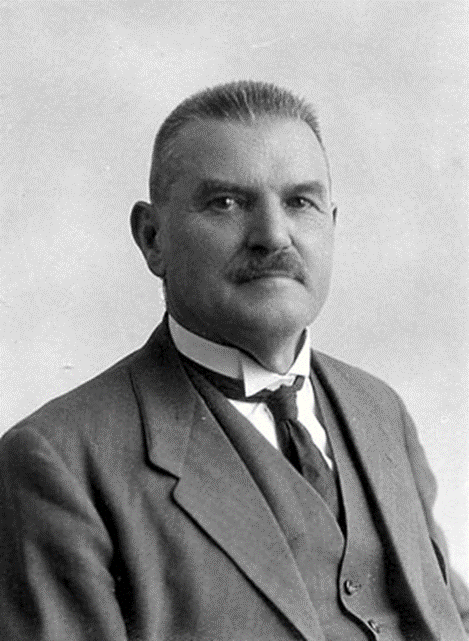
Sir Arnold Steiler

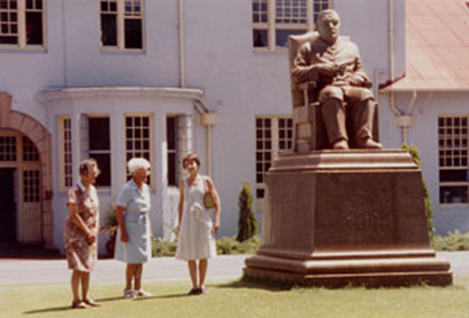
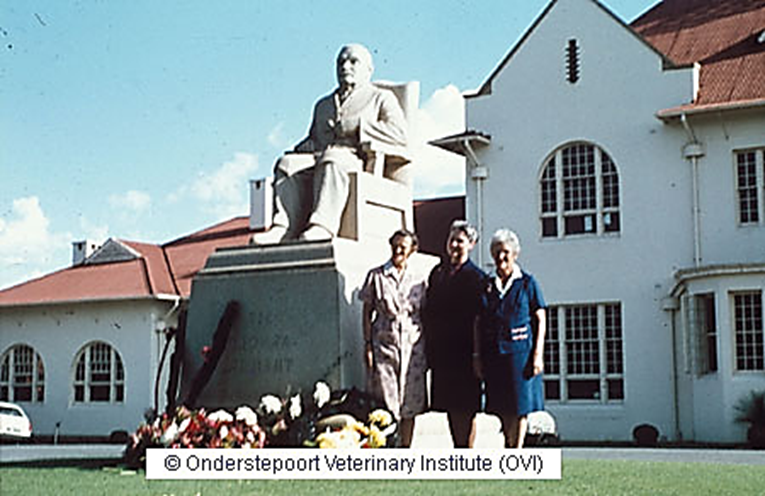
Thelma on the left in both pictures at the unveiling of the Sir Arnold statue
Pictures: University of Pretoria website
Gutsche, in her dissertation, created a structural mapping of her thesis that was to influence all of her later work. Masilela communicates this notion as being a theme that tames, controls and orders chaos, for example “motion pictures” ordering the “cultural space” of the cinema, bringing European civilization into Africa (Masilela 3). Her later works follow a similar theme, for example, her work on Arnold Theiler , according to Masilela, “is about classifying and ordering of Nature, the formation of medical institutions with the aim of making and creating space for European cultural forms in Africa: in other words, the bringing of European civilization into Africa (Masilela 3).
Thelma Gutsche regarded herself as “a biographer and public servant” (The Argus 4). She is reported to have stated in an interview that she was not interested in national heroes, statesmen and war veterans, and wanted to write about the men and women that did pioneering work in South Africa, in their historical perspective. She wanted to write about the unsung heroes (Suid-Afrikaanse Oorsig). Masilela reiterates this notion in his essay on Thelma Gutsche, commenting on her contempt for South African film and the way in which it foregrounded white, Afrikaner nationalism (Masilela 16). You will not find any writing by Thelma Gutsche on the generals, presidents and patriots of early South Africa. Unfortunately, there is no body of work by Gutsche on any of the foremost Black South African personalities that so largely contributed to the process of modernity in South Africa, but like most South Africans, until very recently, the work of these early pioneers was largely unknown outside of their own communities.
Gutsche was apparently an admirer of Vera Brittain, the British pacifist, feminist, poet, and novelist. Brittain’s novels are largely autobiographical. Her best-known work is Testament of Youth (1933), a story of ‘the lost generation’ and the irrevocable changes in her life caused by World War I. There is a sense that Gutsche’s admiration for Britain is a reflection of the parallels between their works in as much as Gutsche analyzed the influence of film on South African audiences in a period of dramatic change, as well as the irrevocable changes brought about in South African modernity by a number of her biographies.
A fighter and defender of the importance of historical detail to the end, when the historic houses of Long Street, where she lived in her last days, were being structurally threatened by heavy trucks, she had the following to say to a reporter from the Weekend Argus newspaper in Cape Town: “The street is being destroyed by a monster of modern society and positive action has to be taken to preserve this important sector of our heritage”. She is reported to have characteristically fought “tooth and nail” to have the heavy traffic re-routed (Brown 12).
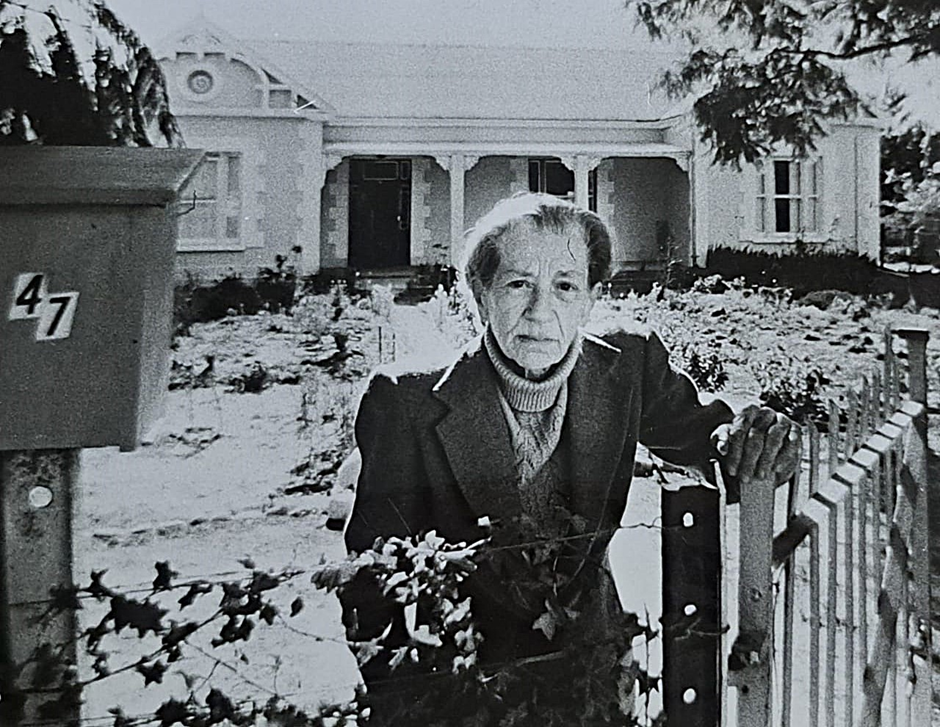
Outside her home at 47 Long Street Montagu
Picture: Montagu Museum
Many years after leaving, Thelma Gutsche returned to her beloved Cape from the Transvaal to spend her last years in the Cape village of Montagu, making her home in a historical Victorian house that she had long set her heart on, number 47 Long Street (Becker 35). In what turned out to be her last year of life, Thelma Gutsche was invited to give the Theiler Memorial Lecture at Pretoria University in September, 1984. Having had a rather dramatic time trying to get there, (driving alone she had rolled her car, writing it off) she went on to receive the first ever standing ovation after the delivery of her lecture (Becker 46, 49). Her smoking induced emphysema worsened, and she died less than two months later on November 5, 1984, seated at her desk in her house in Montagu, aged 69 (Becker 35).

Picture: Google Streetview 2010
Bibliography
Becker, Jillian. “No ordinary woman – Dr Thelma Gutsche: a memoir.” Contrast 15.3(1985): 35-50.
Brown, Robin. “Mobile ‘monsters’ threaten historic Montagu houses” The Weekend Argus 21 Jul. 1984:12.
“Death of Dr Thelma Gutsche” Africana Notes and News, 26 Mar. 1985:5, 186-188.
“Death of Dr Thelma Gutsche” The Argus 7 Nov. 1984:4.
Goosen, Helena. “ Helena Goosen ontmoet dr. Thelma Gutsche” Suid-Afrikaanse Oorsig 474a(1981):8.
Gutsche, Thelma. “Civilisation and the Interrupted Sex.” South Africa. “Natal Society Public Library.”
Masilela, Ntongela. “Thelma Gutsche: A Great South African Film Scholar.” 5 Nov. 2005, http://www.pitzer.edu/academics/faculty/masilela/nam/general/essays/gutsche.htm.
Untitled. South Africa 4 Sep. 1937: CXCV (1937) 25 39, 280.
Viljoen, Deon. “Thelma Gutsche Oorlede” Kalender Bylae tot Bee ld 10 Nov. 1984:2.
Works published, writing:
No Ordinary Woman – The Life and Times of Florence Phillips (1966)
Old Gold, The History of the Wanderers Club (1966)
The Changing Social Pattern of Johannesburg (1967)
The Microcosm (1968)
The Bishop’s Lady (1970) A Very Smart Medal – This History of the Witwatersrand Agricultural Society (1970)
The History and Social Significance of Motion Pictures in South Africa 1895 – 1940 (1972).
There was a Man – The Life and Times of Sir Arnold Theiler (1979)
Co-authored:
Not Heaven Itself (1946), Autobiography on Manfred Nathan (5)
Do You Know Johannesburg? with Patricia Knox (1947)
Contributed to:
The Dictionary of South African Biography.
The Standard Encyclopaedia of South Africa.
Do You Know Johannesburg? with Patricia Knox (1947)
Old Gold, The History of the Wanderers Club (1966)
The Changing Social Pattern of Johannesburg (1967)
There was a Man – The Life and Times of Sir Arnold Theiler (1979)
Michelle Christian is a third year undergraduate student at the University of KwaZulu Natal in Durban, South Africa. She is studying towards her Bachelor of Social Sciences degree and is enrolled in the Culture, Communication and Media Studies program. Michelle is currently an exchange student at Pitzer College in Claremont, California. At the end of her semester at Pitzer she will return to Durban to complete her honors year in 2006.

Foto: Michael Eckhart
Thelma Gutsche-from the portrait by W. Gladstone Solomon, Miss Gutsche is a leading authority on films and has been investigating the history of the cinema in South Africa for ten years
Michael Eckhart: Ek het my MPhil en PhD oor SA-rolprentgeskiedenies geskryf en Gutsche was SA se eerste rolprent- en bioskoopgeskiedeniesskrywer. Haar boek The History and Social Significance of Motion Pictures in South Africa 1895 – 1940 (1972) is die cornerstone van die vak in SA.
Something from Blackie Badenhorst
Hierdie inligting is slegs my eie weergawe van een van die merkwaardigste vroue wat in my leeftyd oor my pad gekom het. Ek het van haar gedurende die tagtiger jare toe my skoonmoeder op Colesberg in telefoongesprekke vertel het van die skryfster van geskiedkundige boeke van Johannesburg wat by haar bly terwyl sy navorsing doen oor die dorpie Colesberg. Die boek The Microcosm sou in die sestigs verskyn.
As eerste kurator van die Montagu Museum was ek een oggend vroeg besig om ‘n toer vir kleuters deur die museum te neem toe ‘n baie skraal vrouefiguur in die voordeur verskyn en sy in ‘n harde rokerstem sê: “That’s right, catch them young”. Sy het ‘n bruin snyerspak aangehad en ‘n bruin leersak onder haar arm. Haar naam is Thelma Gutsche, sy het na Montagu verhuis weens gesondheidsprobleme, woon in Langstraat 47, en my skoonmoeder Dolly van Colesberg, stuur groete.
Ons gesin het in die Four Oaks gewoon met die museum regoor ons en Thelma wat langs die KWV huis gewoon het, het dus ons buurvrou geword. Sy het ‘n passie vir tuinmaak gehad en ‘n baie kleurvolle, wilde tuin het ontstaan, elke aand teen skemer sou jy haar sien staan met ‘n tuinslang in die een hand en ‘n sigaret in die ander. Sy het gou vriende gemaak en haar vriendekring het bestaan uit Esther Hofmeyr, Steve en Marlene Terblanche, Sylvia Krige, Cecily van Niekerk, die Wegelins, Justine Basson, haar buurvrou Suria Vermeulen en Piet, my eggenoot, wat verbonde was aan die museum.
Klokslag 9 uur soggens het sy haar aangemeld by hom in sy kantoor, die verslete bruin leertas oopgemaak en vir hom ‘n paar items geskenk, nl. knipsels uit haar Engelse Johannesburg koerante, ‘n paar koeverte, die inhoud afwesig, wat hy weer kon gebruik, opgerolde stukkies tou en proppe, alles items wat weer gebruik kon word. Piet het gesê “Blackie ek is bang vir Dr. Thelma” en as dit so was, was dit omdat ek nie haar hoë Engelse akademiese taal kon snap nie, veral al die deftige byvoeglike naamwoorde!
Sy het dikwels gaste ontvang en het hulle dan by ons laat oorbly in ons woonstel op die hoek. Hyme Rabinovich en sy vrou Jenifer en jong seuntjie van Eagles Nest in Constantia het gereeld gekuier. Dit was tydens so ‘n besoek aan haar dat haar ou vriend, die argitek van Anglo American, Ken Birch vir Esther Hofmeyr ontmoet het en ons Jouberthuis bekom het.
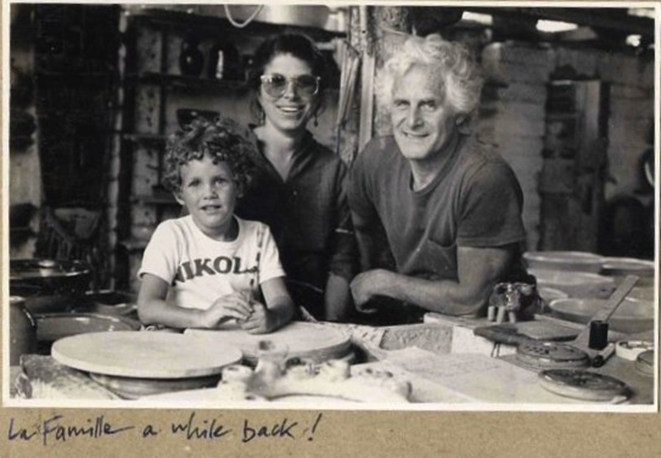
Hyme and Jenifer Rabinowitz
Thelma het daarvan gehou om vir ‘n saak te veg, met haar rooikop en woordeskat was min van ons opgewasse teen haar. Sy het ook belangrike mense geken wat ons nog nooit van gehoor het nie.
Die jare op Montagu het sy geveg vir die behoud van Langstraat, met sy appelkoosboorde, wingerde en geen besighede nie, en die verkeer wat soveel skade aan die ou Kaapse wonings aangerig het. Sy het ‘n Langstraat groep gestig, lede gewerf, vergaderings belê met baie belangrike individue en tot haar dood geveg vir die mooi, groen straat, “the last remaining green belt in a very special village” volgens Revel Fox.
Sy is op 5 November dood gevind by haar lessenaar met ‘n skêr in haar regterhand en haar kop op die Engelse koerant waaruit sy ‘n artikel wou uitknip. Op die lessenaar was ‘n silwer vasie met ‘n rooi roosknop in wat sy gepluk het toe sy die laaste keer haar tuin nat gemaak het.
‘n Roudiens is vir haar gehou in die Montagu Museum en al die blomme, veral die wit gladioli was uit haar tuin afkomstig. Op 7 Januarie, haar verjaarsdag, het haar vriende in die Natuurtuin byeengekom om haar as te strooi en ‘n glasie muskadel te geniet.
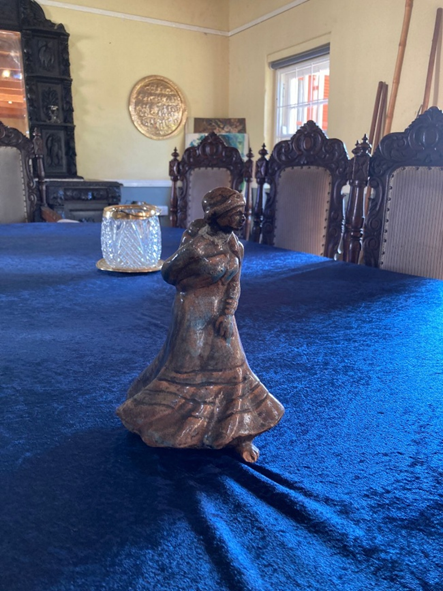
Haar enigste suster, Joan het in Kanada gewoon by haar seun en hy het na Montagu gekom om haar boedel af te handel. Al haar waardevolle dokumente en boeke is bemaak aan die Africana museum in Johannesburg, haar skilderye is opgeveil deur Sotheby’s (onder andere ‘n Stern portret) alle klerasie, beddegoed, ens. is geskenk aan Ds Dirkie Marais van M.A.G, en haar veiling is behartig deur Schalk Esterhuyse van Van Zyl & Hofmeyr. Tydens die veiling wat by haar huis gehou is het ek vier items gekoop, haar akkerhout lessenaar (R35) haar akkerhout liasseer kabinet (R90) ‘n klei beeldjie van ‘n vrou met ‘n baba op die rug (R10) en 2 Oosterse geborduurde sydrukke (R14).
Die lessenaar en liasseerkabinet het ek jare gelede geskenk aan my seun, Emile. Die twee sydrukke behoort vandag aan my vriendin Sandra Reinhardt.
Agterop die sydrukke was ‘n koevert: Dis geskenk aan Thelma deur die Theiler Susters, dis om dankie te sê vir haar 10 jaarlange navorsing oor hulle broer Arnold Theiler vir die omvattende inligting in die boek oor sy lewe, “There was a man” (die stigter van Onderstepoort).
Ek dink steeds saans aan Thelma, op my bedkassie staan die vrou en die bababeeldjie en as ek die bedliggie afskakel, wonder ek steeds wie die kustenaar was.

Extracts from the:
Research Project for the Degree of Master of Philosophy in Conservation of the Built Environment University of Cape Town
MONTAGU: URBAN CONSERVATION IN A SMALL TOWN The Role of Voluntary Conservation Groups and Planning Law in Heritage Resource Management
Frederik Saaiman Vermeulen
Student No. VRMFRE002 October 2011
I grew up and matriculated in Montagu and still visit there regularly. Our family home is in Long Street, the most historic street in Montagu. For four years our neighbour was Dr Thelma Gutsche, a respected historian, writer and film critic, who played an early role in instilling a conservation awareness in me. My parents, Siebert and Suria Vermeulen were part of the Long Street Group, an early conservation lobby group, created and chaired by Dr Gutsche until her death in 1984. This group also included Esther Hofmeyr, who played a leading role in conservation in Montagu between the 1970s and 1990s.
Furthermore, my mother worked as a volunteer at the Montagu Museum, as my aunt, Trynie Saaiman still does, and my father maintains the late-19th Century German clock in the tower of the 1862 Dutch Reformed Church. In Montagu, one is surrounded by heritage.
The Long Street Group played a role in conservation during the early 1980’s. This committee published a monthly “Long Street Letter”, distributed to Long Street residents and other subscribers, providing the community with historical information about their town and the committee played a significant role in the declaration of several National Monuments on Long Street during the 1980’s (Heydenrych, 2007, pp33-34). They also facilitated research by UCT’s Department of Environmental Studies, on the effects that the vibrations caused by heavy vehicles has on the historical buildings of Long Street and advocated the rerouting of truck traffic along Van Riebeeck Street, Montagu South, which has a wider road reserve and no historic buildings alongside it. This was however strongly opposed by residents of Montagu South and was not implemented.
Please click on the link below if you would like to read the complete thesis
A fellow scholar recognizes Thelma Gutsche in his article:
THELMA GUTSCHE: A GREAT SOUTH AFRICAN FILM SCHOLAR
by Ntongela Masilela
https://pzacad.pitzer.edu/nam/general/essays/gutsche.pdf
Blackie Badenhorst arranged a gathering of Thelma Gutsche’s friends on the anniversary of her birthday to lay her ashes to rest in the Montagu Nature Garden.
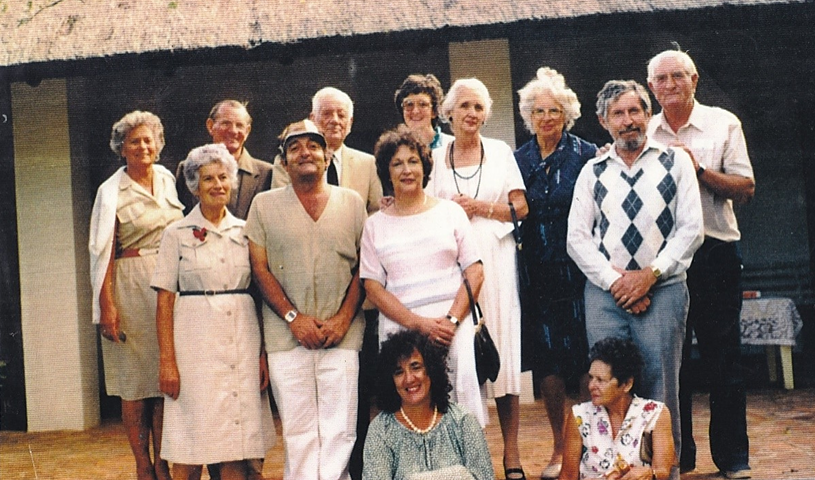
Back: L/R – Justine Basson, Willie Cilliers (Mayor), Arthur Wegelin, Suria Vermeulen, Dalene Terblanche, Wytske Wegelin, Ewie Basson.
Middle: L/R – Sia Cilliers, Piet Badenhorst, Inez Kachelhoffer, Louis Kachelhoffer
Front: L/R Blackie Badenhorst, Sylvia Krige
Photographer: Esther Hofmeyr
Contributions: Thank you Kobus Smit for always being willing to proof-read and transcribe stories
